Fume cupboards keep technicians safe, but they're often misunderstood. While many people understand how they work, they lack knowledge of the standards that govern these machines. Specifically, EN 14175. Now, you may have heard the phrase EN 14175 thrown around by service engineers and fume cupboard manufacturers and scratched your head in confusion. But don't panic, you're not alone.
It's a somewhat taboo subject that means different things to different people. Like art or success. As Friedrich Nietzsche once said, “All things are subject to interpretation; whichever interpretation prevails at a given time is a function of power and not truth.” Today, we will clarify those interpretations and give you definitive answers on what the standards entail.
EN 14175 is the European standard that defines how fume cupboards should be designed, tested, installed and maintained. It provides a loosely guided framework to regulate an otherwise lawless industry. In simple terms, it sets a consistent benchmark for safety, performance, containment and compliance. If a fume cupboard meets the criteria specified in EN 14175, it's been manufactured and assessed using recognised test methods designed to keep people safe. It almost acts as a safety guarantee for the usability of the equipment.
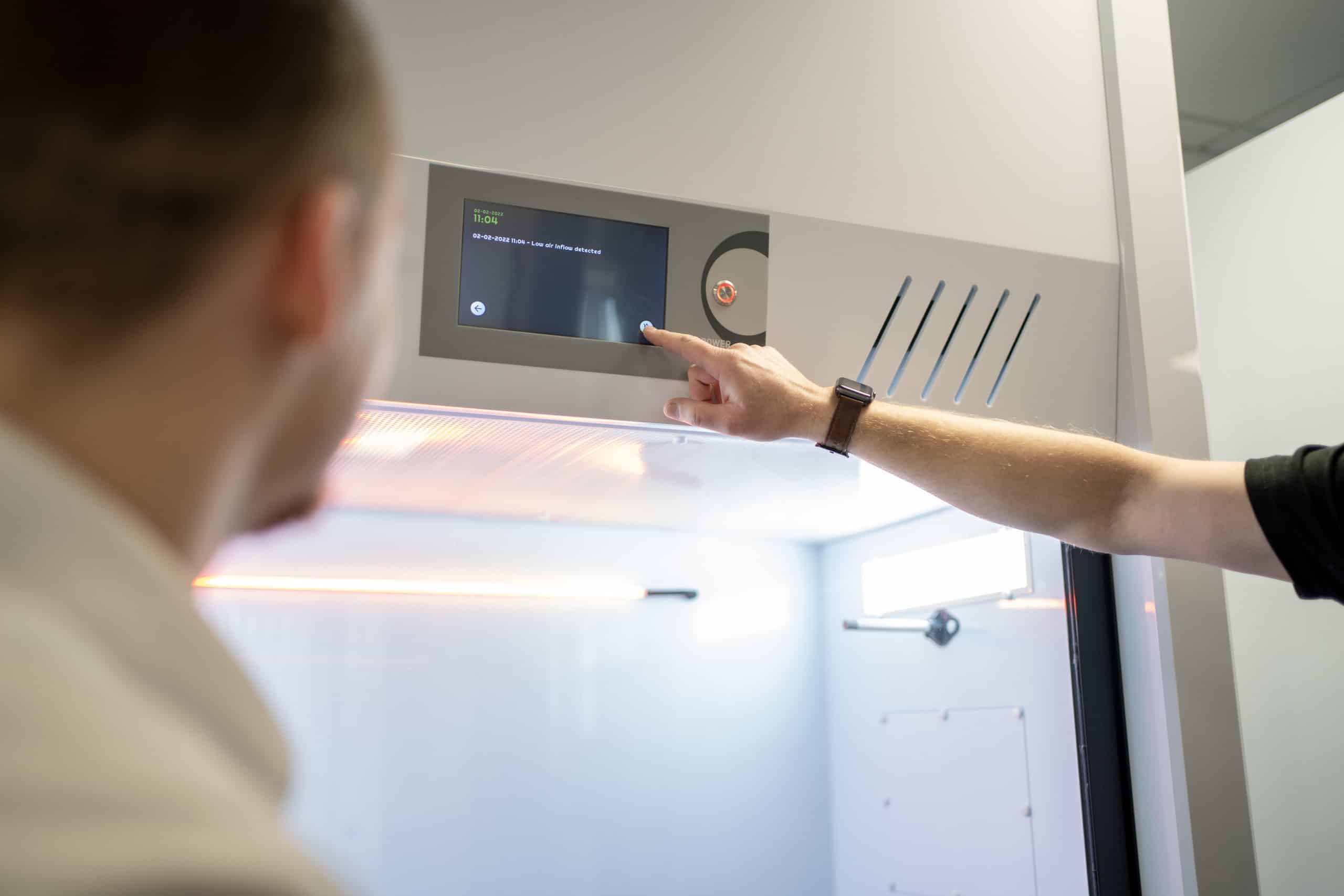
That said, different manufacturers offer varying levels of quality. For example, one control system may use mechanical switches, while the other uses a touch screen. It's worth considering these systems in addition to the certification of the equipment when purchasing a product.
To start with, EN 14175 is a multi-part standard that addresses the lifecycle of a fume cupboard. It's not a single rule. The standard is divided into eight parts:
Each part addresses a specific aspect of how a fume cupboard functions, is tested, or the terminology involved. For example, part 1 defines what a fume cupboard is, with terms, definitions, and multilingual translations for components, performance, and design choices. But the benefits don't end there.
The framework also applies to the design of labs, ventilation systems and access points. How so? Well, for argument's sake, let's say we're designing a laboratory with six ducted fume cupboards. Space planning and access are essential. You need to ensure the containment of the fume cupboard isn't compromised by walkways, air outlets or windows. While walkways are not specifically mentioned in EN 14175, containment is. The ventilation system will also require thought depending on whether the fume cupboard is CAV or VAV compatible, which is referenced in part 6.
Let's start this paragraph with a question. What would happen if EN 14175 didn't exist? Compromised containment, inhalation of toxic fumes, poor manufacturing process, and laboratory downtime would run rampant. The standard provides accountability to those in positions of authority. It also protects those who use the equipment. In short, EN 14175 demonstrates due diligence during audits and maintains a consistent, repeatable safety standard across multiple sites. Or in this case, an entire continent.
We have an article titled "How Often Does My Fume Cupboard Need Servicing?" which covers testing, so I'll make this brief. EN 14175 defines how often a fume cupboard should be serviced and what those procedures involve. In this case, face velocity testing, smoke pattern visualisation testing, and, on occasion, tracer gas containment tests. It's worth noting that the cabinet needs to be tested once every fourteen months by law. Failure to do so could result in legal action and fines.
So, to clarify, EN 14175 is a legitimate, legal framework that governs the design, installation, use and servicing of laboratory fume cupboards. It's not something that only applies to "new" cabinets. Technicians often think that if the airflow is fine, the system is compliant. That's not the case. While the cabinet may function correctly, issues with the control system, fan or filter may persist unnoticed.
Remember, just because the standard recommends a service every fourteen months, you can still schedule tests within that time frame. For example, if you choose to service your cabinet every nine months, that's entirely your call. EN 14175 doesn't dictate when you should do something, but how. It's the same principle when designing a fume cupboard. It can be any colour, shape, or height, as long as it conforms to the standard and maintains containment.
Final thoughts: EN 14175 isn't something to be feared, overcomplicated or brushed off as paperwork. At it's core, it exists for one simple reason. To keep people safe. That's not to say there's no room for professional judgment. It considers real-world conditions inside the lab, so opinions matter. The standard is there to enable safe working practices, not limit them. It supports reliability, design choices and understanding. When used properly, your fume cupboards will do exactly what they are designed to do. Protect the people working in front of them.
Read our Privacy Policy for more information on how we collect and process data.



No thank you
Read our Privacy Policy for more information on how we collect and process data.